
Murphy, Dan / Escritor
Radio is free, my mother said. Why would anyone pay for this?
I asked her whether she paid for bottled water.
In 1998, Dan Murphy walked away from a VP title at Sony, fifteen years of relationships, and one of the most respected brands in the world to join fourteen people in a rented basement office with bright orange walls, an $80 million FCC license, and roughly twelve months of money left.
The plan was to build a radio network in space and convince a country that had never paid a dime for radio to start paying ten dollars a month. Nobody knew yet whether a satellite signal could even reach a car moving at highway speed, or whether the antenna would end up the size of a car roof and cost two thousand dollars to install. Raise the next round or disband. That was the whole strategy.
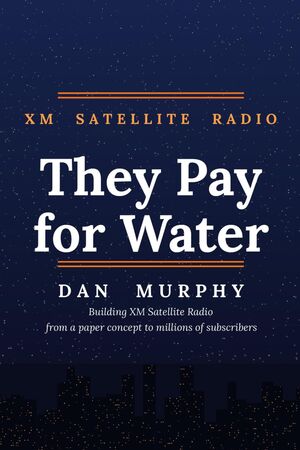
They Pay for Water is the inside account of what happened next, told by one of the founding executives who lived it: the funding rounds that nearly failed, the fight to get XM radios onto retail shelves and into car dashboards, the satellites, the programming wars, and the two numbers CHURN and SAC that quietly decided whether any of it would work.
The launch was set for September 12, 2001 two cities, San Diego and Dallas, with a nationwide rollout to follow a few months later if the numbers justified it. Murphy had the Dallas press events. His flight left Reagan National at 6:30 a.m. the morning before.
On September 11, 2001, he drove his usual route to the airport, through the Pentagon parking lot, a mile from his house in Falls Church. It was dark and quiet, and he drove through it without a second thought, the way he had hundreds of times before. In twenty-four hours, XM Satellite Radio would go live in two cities at once.
The company survived what came next. It scaled, filled its hallways with the biggest names in music and sports, and merged with Sirius. And then, with the merger closing, Murphy was diagnosed with Sarcoma and left the best thing he had ever helped build to go home to his two kids and fight something else entirely.
A story about building a company, and about knowing when to walk away from one.