
Religion, Language and Community in the Roman Near East
-5%

Religion, Language and Community in the Roman Near East

Millar, Fergus / Escritor

37,41 €
35,54 €
IVA incluido
Editorial:
Oxford UP
Año de edición:
2023
Materia
Historia
ISBN:
978-0-19-726557-4
Páginas:
150
Idioma:
Inglés
Encuadernación:
Tapa dura
Alto:
242mm
Ancho:
167mm
37,41 €
35,54 €
IVA incluido
Añadir a favoritos

This book explores the way in which different ethnic, religious and linguistic communities co-existed and conflicted in the Roman Near East in the three centuries between the conversion of the Emperor Constantine to Christianity in 312 and the beginning of Muhammad's preaching in about 610. In the fourth century a major role was played by Greek-speaking pagans, most notably the great orator, Libanius, from Antioch in Syria. After about 400, however, the public observance of pagan rituals died away under the pressure of Christianity.

But the Greek language, as used in the Church, remained dominant. Pagan Aramaic is curiously invisible in this period, but the dialect of Aramaic used by Jews in Palestine is found in very extensive use, along with Hebrew, in a mass of religious literature, including the Palestinian Talmud, Aramaic versions of books of the Bible, and in inscriptions from synagogues. Most of the synagogue inscriptions come from their often quite elaborate mosaic floors, some of which contain visual representations of scenes from the Bible.

Jews used Greek also, even in the inscriptions from synagogues, and so too did Samaritans, who were a powerful force in Late Antique Palestine, mounting two major revolts against the Empire. Outside Palestine, the most notable development in the culture of the region was the emergence of Syriac (a particular dialect and script of Aramaic) as a language of Christian culture and belief. 'Syrians' however were not a distinct ethnic group.

The group which was most distinct from the others was made up of the unsettled and warlike peoples on the fringes of the Empire whom almost invariably, call 'Arabs', but who in Late Antiquity were far more often referred to as 'Saracens'. By the end of the period, many of them had converted to Christianity. The major puzzle which the book poses is what is the relation between this process of conversion and the rise of Islam.

Artículos relacionados

  • Los maestros de la Historia (1900-1939)
    Peiró Martín, Ignacio / Escritor
    Este libro es una historia de la historiografía liberal española. En sus páginas se estudian losfundamentos de la construcción disciplinar de la ciencia histórica, la corporación profesional y ladiversidad de personalidades académicas de Los maestros de la Historia entre 1900 y 1939.La obra se dispone en dos partes: Galería de historiadores célebres reúne una narración articula...
    En stock

    26,00 €24,70 €

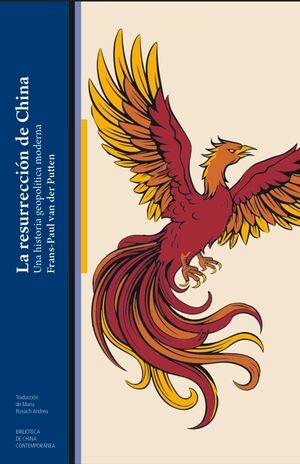
  • La resurrección de China
    La resurrección de China propone un recorrido claro y revelador por el ascenso de China, desde la Guerra del Opio de 1840 hasta su consolidación como una de las grandes potencias del siglo XXI. El autor nos muestra cómo las relaciones de China con otras potencias han marcado su transformación política, económica y cultural, y hasta qué punto ese largo recorrido histórico sigue ...
    En stock

    19,00 €18,05 €

  • Captain's Dinner
    Cohen, Adam / Escritor
    Four men in a lifeboat. Two weeks without food. One impossible choice that would reshape the boundaries between survival and murder.'A perfect enunciation of the classic philosophical conundrum: can you sacrifice one innocent life to save many?' (Yann Martel, author of Life of Pi)On May 19, 1884, the yacht Mignonette sailed from England on what should have been an uneventful vo...
    En stock

    24,49 €23,27 €

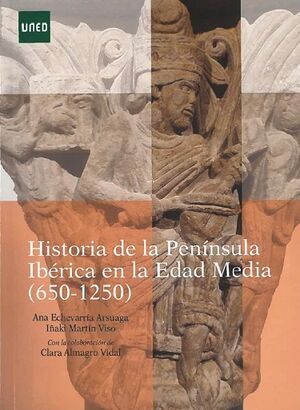
  • Historia de la Península Ibérica en la Edad Media (650-1250)
    Echevarría Arsuaga, Ana / Escritor Martín Viso, Iñaki / Escritor Almagro Vidal, Clara / Escritor
    Este libro se concibe como una introducción a la historia de los primeros siglos de la Edad Media en la Península Ibérica. Los límites de esta, aumentados por las islas e incluso el norte de África, serán el maraco en el que se desarrollan las entidades políticas que formaron Hispania, al-Andalus y los reinos cristianos que evolucionarían hasta convertirse posteriormente en Esp...
    En stock

    52,00 €49,40 €

  • Catedrales Medievales de los Reinos Hispanicos
    Varios Autores / Escritor
    Como espacios vivos y polivalentes, las catedrales medievales constituyen realidades plurales y diversas, en las que cada caso refleja necesidades, configuraciones y usos propios. Estos complejos ecosistemas han sido objeto de una constante atención académica, así como de una incansable producción científica en continua evolución. En el ámbito de la Historia del Arte, en concre...
    En stock

    40,00 €38,00 €

  • Hernán Conrtés. Encuentro y conquista
    Zunzunegui, Juan Miguel / Escritor
    Tras el éxito de Al día siguiente de la conquista, con más de 25.000 ejemplares vendidos, Juan Miguel Zunzunegui publica en España una biografía reveladora sobre Hernán Cortés para colocar la historia en el lugar que tradicionalmente ha invadido la propaganda.Villano o héroe. Constructor o destructor... Todo lo que tiene que ver con Cortés se mueve hoy entre los adjetivos más e...
    En stock

    21,90 €20,81 €